Crop brief translation
We turn crop stage, target PPFD and photoperiod into a defined lighting question. The discussion includes existing daylight, bench or row dimensions, desired DLI contribution and practical access for cleaning or replacement.
A commercial grow-light project is a chain of decisions: crop morphology, target DLI, facility geometry, photoperiod, electrical capacity, controls and commissioning. Our service path keeps those dependencies visible so procurement teams, growers and engineers can make the same decision from the same evidence.
We turn crop stage, target PPFD and photoperiod into a defined lighting question. The discussion includes existing daylight, bench or row dimensions, desired DLI contribution and practical access for cleaning or replacement.
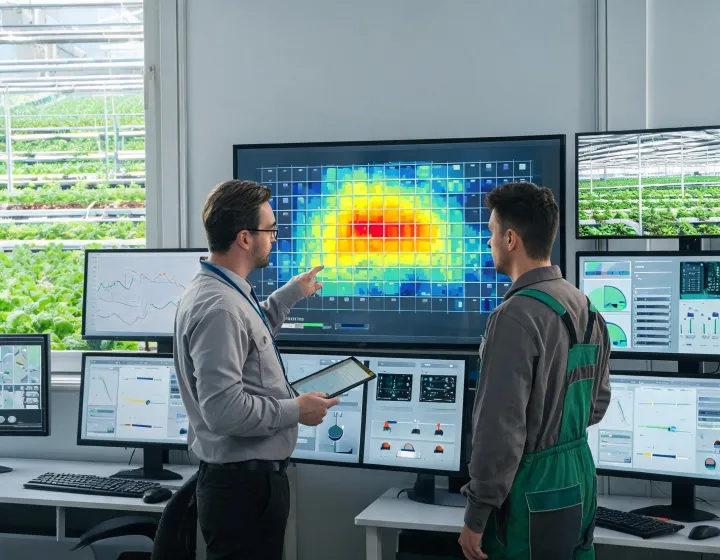
Fixture count alone cannot predict a successful canopy. We review mounting geometry, edge losses and obstructions, then frame average PPFD together with minimum-to-average uniformity so localized excess does not disappear inside one headline number.
Input voltage, circuit loading, driver behavior, inrush current and dimming interface are organized for the electrical team. This reduces late substitutions that change photon output or compromise control zoning.
Schedules, dimming limits and zone names are documented around real cultivation routines. Operators receive an understandable baseline that can evolve with crop feedback rather than an opaque automation sequence.
After installation, measured light levels can be compared with the plan. The review distinguishes commissioning adjustments from agronomic experimentation and gives facility teams a traceable starting point for future crop cycles.
Values are established per project rather than promised as universal outcomes. This distinction matters: a target at one mounting height, crop architecture or reflection condition cannot simply be copied into another room. By keeping inputs explicit, a grower can see what changed when a revised layout, schedule or luminaire is proposed.
Bring a drawing, crop plan and operating target. We will help identify the information needed for a defensible lighting study.